
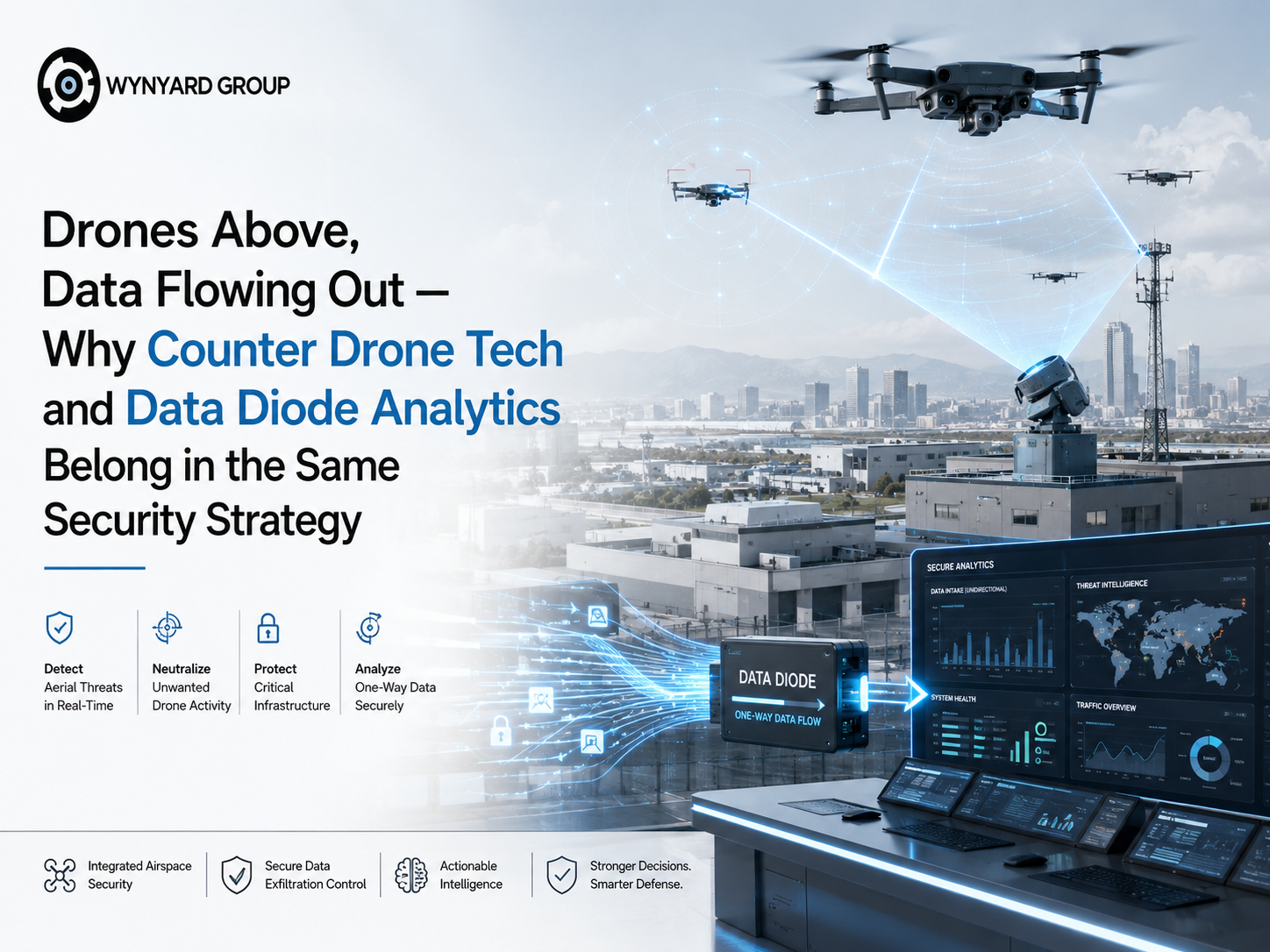
The skies above the petrochemical plant located in Singapore are cleared after an annual inspection. The small commercial drone, which hovered close to the area for around 11 minutes. Three weeks later, that same facility finds that an operational database was accessed through an insecure endpoint. The attack from the air as well as the data breach seem not to be related. The two incidents were unrelated.
Security professionals throughout Southeast Asia are waking up to a complex threat environment in which physical airspace vulnerability and cybersecurity risks to networks aren’t separate issues, but similar problems seen from various perspectives. Affecting one without being able to address the other can leave critical infrastructure organizations at risk.
The Drone Threat Is No Longer Theoretical
Counter Drone Technology has quickly moved from military procurement lists to civil infrastructure briefings throughout the region. In the region of Malaysia, Indonesia, Thailand, and the Philippines, the government and private-sector operators are responding to incidents that have been documented involving illegal drones in locations for power generation or data centres, as well as ports for maritime traffic.
The thing that makes aerial threats really complicated is their dual nature. Drones are employed to monitor physical locations, and deliver malware, disrupting communication through interference with signals, and are more equipped with specialized hardware to attack Wi-Fi networks and take over communications that are not encrypted in proximity. A drone that is carrying a fake access point is able to fly at a distance of 30 meters above a building and make it difficult to steal credentials, or even inject data into a wireless space.
The discussion concerning Counter Drone Technology must extend beyond neutralisation and detection. If the threat actor makes use of drones to communicate with your computer, it is a sign that you’ve entered the realm of cybersecurity.
Why Data Diode Cyber Threat Analytics Changes the Equation
Data diodes are secure, hardware-enforced network security devices. It permits data flow only in one direction, even if an attacker gains access to the network segment and uses that method to obtain details or initiate commands that go in the other direction. High-assurance environments include operating technology networks as well as classified government systems and infrastructure. Critical to the national data diodes have been the primary security for a long time.
What’s changing the technology’s combination with sophisticated cyber-security analytics platforms. Data Diode Cyber Threat Analytics is a combination of the complete integrity of the hardware-based traffic control system, real-time analysis of behavioural patterns, threat intelligence correlation, and the detection of anomalies. Companies are no longer just able to move information securely from one area to the next. They can gain an auditable, structured view of the information that this data provides regarding threat patterns, attempts to penetrate, and malicious behavior. This is without the risks of reverse-channel, which software-only monitoring tools create.
As a practical matter, it means that a crucial infrastructure manager located in Vietnam or a defense-related facility located in the Philippines could monitor the operational technology networks, infiltrate feeds of threat intelligence, and manage analytics workflows over the air-gapped and high-security environment with no compromise to privacy, which makes these environments secure initially.
The Convergence Point Security Strategies Must Address
The relationship to Counter Drone Technology and data diode analytics isn’t literal. It’s an architectural connection.
In the event that organizations implement counter drones, the systems produce large amounts of telemetry. These include radar returns as well as signature libraries for radio frequency optical tracking information, records of geolocation, as well as incidents records. The data generated is sensitive in operation and, within a number of Southeast Asian regulatory contexts, is subject to stringent handling rules. When drone detection telemetry is transmitted over networks without an appropriate segmentation system and controlled unidirectionally, the data can create an entirely new attack area.
An advanced threat actor who is conscious that your organization has installed counter-drone systems could particularly target the data infrastructure supporting these platforms. The disruption or manipulation of drone detection feeds can be possible to create blind spots before a physical event. Securing the analytics pipeline using the data diode technology can close this loop.
Wynyard Group works with organizations that view security as a process, not as a checklist. The combination of Counter Drone Technology with powerful Data Diode Cyber Threat Analytics is a reflection of the systems-level approach. Both solutions are designed to combat an adversary operating in both digital and physical domains in tandem and are actively looking at the weaknesses in your defenses.
What Regional Operators Should Be Evaluating
All across Indonesia, Singapore, Thailand, and the neighbouring markets, critical infrastructure providers have been under increased pressure to present layered security frameworks. Regional frameworks, including the guidelines released by the Cyber Security Agency of Singapore, and similar authorities that are in Malaysia and the Philippines, are increasingly requiring organizations to take into account threats from cyber as well as physical threats in unified security strategies.
In the procurement and security architecture teams, the assessments are easy. Do your counter drone solutions generate data that is safeguarded from the exact danger actors that it is created to recognize? Do you have your cyber threat analysis capabilities provide greater visibility into areas of technology that drone-generated attacks are most likely to be a threat? Does your security framework consider the airspace over your premises like an extended part of your perimeter network?
Building a Security Strategy That Reflects the Actual Threat
Security teams for physical and cyber typically operate in distinct organizational isolations. This separation was logical as threats could be clearly identified distinct from one another. The time for that has come and gone.
Organizations in Southeast Asia that are building truly resilient security structures are those that have brought Counter Drone Technology and Data Diode Cyber Threat Analytics to form a common strategy system. There are tools available. The logic of integration is solid. The only thing that remains is an organizational determination to stop treating the network and the sky as two separate issues.
Wynyard Group supports that holistic approach for organizations throughout the region that face the same risks that are converging.